

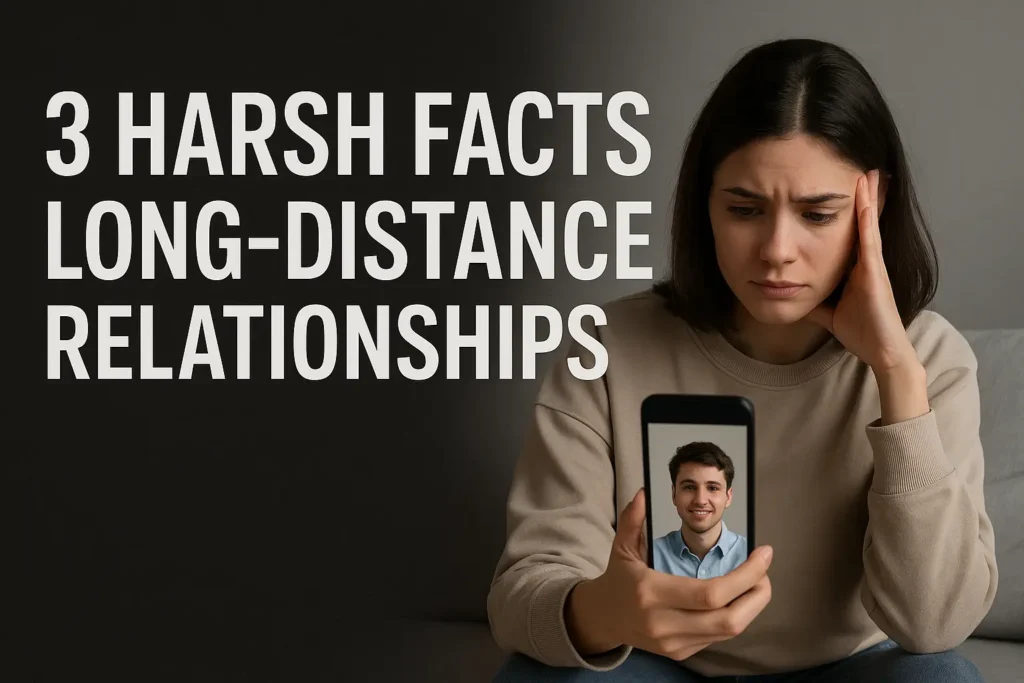
Long-distance relationships, or LDRs, are never simple. They test couples in ways that many do not expect. When two people live far apart, they face real relationship challenges every day. Emotional challenges can grow when you cannot share simple moments. Missing physical touch, hugs, or even sitting together can create loneliness in relationships. Video calls and texting help, but digital communication is not the same as being close. Wi-Fi glitches, time zones in relationships, and missed social events like birthdays and anniversaries make it even harder.
Trust issues and communication barriers often appear when distance gets longer. Misunderstandings grow faster, and doubts or insecurities feel stronger. Financial challenges in relationships also matter. The cost of travel for couples, flights, and gift deliveries can be heavy. These 3 harsh facts long-distance relationships reveal show why love needs resilience, patience, and a plan.
Harsh Fact #1 – Loneliness and Emotional Strain
The Risk of Loneliness
One of the biggest challenges in long-distance relationships is loneliness. Everyday life feels incomplete without your partner nearby. You may find yourself missing their presence in even the smallest things, like sharing a meal or talking before bed. This gap often makes people feel isolated, especially when surrounded by other couples.
Loneliness in relationships can create emotional strain over time. It may start small but grows as weeks and months pass. Many couples in long-distance relationships report feeling disconnected from the world around them. This shows why loneliness is often mentioned first when talking about the 3 harsh facts long-distance relationships bring.
Emotional Toll of Missing Physical Closeness
Human beings need physical touch for comfort and reassurance. A hug, holding hands, or even sitting together in silence can build strong emotional bonds. When couples are far apart, these simple moments are missing. Video calls and texting help, but they can never replace the warmth of physical closeness.
Over time, missing these moments creates emotional exhaustion. Partners may feel more vulnerable and sensitive. Doubts about love or commitment can arise, not because of lack of care, but because of the absence of physical connection. This is one of the hardest truths of long-distance love.
Feelings of Insecurity and Expert Insights
Another struggle tied to distance is insecurity. When you can’t see your partner often, questions can form in your mind. Are they still as committed? Do they miss you the same way? These thoughts may lead to misunderstandings. Trust becomes harder to maintain, especially with time zones, missed calls, or delays in replies.
Experts note that couples separated by distance often deal with higher levels of stress and doubt. Studies suggest that the lack of touch and frequent reassurance adds pressure to both people. Out of the 3 harsh facts long-distance relationships highlight, insecurity often ranks alongside loneliness as a major issue. Building trust, communicating openly, and planning future visits are vital steps in overcoming this emotional strain.

Harsh Fact #2 – Communication Barriers
Misunderstandings in Digital Conversations
Long-distance couples often depend on texts, video calls, and social apps. While these tools make it easier to stay connected, they also create space for misunderstandings. A simple message may be taken the wrong way without tone or body language. Missed calls or short replies can quickly create doubt.
Time zones in relationships also add pressure. One partner may be free while the other is busy at work or asleep. This imbalance makes regular conversation hard to maintain. It is one of the most common issues listed in the 3 harsh facts long-distance relationships create, and many couples struggle with it daily.
Wi-Fi Glitches and Emotional Stress
Technology keeps couples connected, but it is not perfect. Poor Wi-Fi, weak signals, and dropped calls often interrupt deep conversations. These small glitches can cause big frustration. Imagine pouring out your heart only for the screen to freeze. Such moments leave both people feeling unheard.
Over time, these interruptions can add stress to the relationship. Couples may avoid longer talks because of constant technical issues. Texting becomes the fallback, but it often lacks emotional depth. The gap between digital and real-life communication grows wider, fueling stress and insecurity.
Expert Advice on Stronger Communication
Experts suggest couples need patience and creativity when dealing with digital communication. Instead of focusing only on words, couples should add shared activities online. Watching a movie together, cooking over video, or playing online games can help make conversations richer. These small efforts bring back some emotional closeness.
Another solution is setting clear expectations. Planning call times around time zones reduces stress. It also shows both partners are committed. Experts agree that communication is not about how often you talk, but how meaningful those talks are. Among the 3 harsh facts long-distance relationships highlight, communication barriers can be improved with planning and consistency.

Harsh Fact #3 – Trust Issues and Doubts
The Weight of Distance on Trust
Trust is the foundation of any relationship, but distance makes it harder to build and maintain. Without daily presence, partners cannot see each other’s actions or routines. This absence often leaves space for doubt. Even small delays in replies or canceled calls can feel bigger than they are.
For many couples, these moments create stress. Insecurity builds when questions go unanswered. Among the 3 harsh facts long-distance relationships reveal, trust issues remain one of the toughest challenges. They test patience, faith, and emotional stability.
External Voices and Opinions
Family, friends, and society often add to the pressure. Some people question if long-distance relationships are worth the effort. These outside voices can plant seeds of doubt in even strong couples. It becomes harder when close people suggest choosing between love and career or push for quick decisions.
Hearing negativity from others makes partners second-guess themselves. Instead of focusing on growth, couples spend energy defending their choice. Over time, this constant defense can weaken the bond. Doubts rise not only from within but also from the world around them.
Building Reassurance and Security
Experts say reassurance is key in long-distance trust. Small acts like sharing your schedule, sending regular updates, or making future plans help. These actions reduce uncertainty. A clear relationship roadmap can make partners feel secure. It shows that both are working toward closing the distance.
Therapy or counseling support also helps couples manage insecurities. Talking to professionals teaches new tools for handling doubt and stress. Virtual dates, shared hobbies, and consistent communication also create a stronger emotional shield. Of the 3 harsh facts long-distance relationships point out, trust can be rebuilt if both partners remain open, patient, and intentional.

How to Cope With These Harsh Facts
Building Emotional Resilience
Coping with distance starts by building emotional strength. Accept that loneliness, trust issues, and communication gaps will appear at times. Instead of denying the pain, couples must acknowledge it. Honest conversations about feelings prevent misunderstandings from growing.
Personal growth is also important. Hobbies, exercise, and focusing on work or studies bring balance. A stronger individual creates a stronger partner. Experts often note that resilience is the heart of handling the 3 harsh facts long-distance relationships reveal.
Strengthening Communication Routines
Good communication is not about constant texting but meaningful connection. Couples can set times for video calls, share updates about their day, and even plan virtual dates. This brings stability to the relationship.
Digital tools help bridge the gap, but effort matters most. Celebrating milestones like birthdays or anniversaries with online surprises keeps the bond alive. Clear boundaries and expectations reduce doubts. When both partners feel heard, insecurity loses power.
Creating a Shared Future Vision
Having a future plan is essential for survival in long-distance love. Couples who discuss goals like closing the distance, career choices, or family planning feel more secure. This vision offers hope when challenges feel heavy.
Financial planning is also part of this. Travel costs, time zones, and missed social events all play a role. Budgeting together reduces stress. When both partners see a clear roadmap, they find motivation to continue. The 3 harsh facts long-distance relationships highlight may still exist, but a shared vision makes them easier to handle.

When It Might Not Be Worth It
Ignoring Emotional Needs
Every relationship needs emotional connection. When one or both partners stop meeting this need, distance feels heavier. Constant loneliness or anxiety is a red flag.
Some couples try to push through, but ignoring emotional gaps only builds resentment. If the relationship drains more energy than it gives, it may not survive. Many experts agree that unresolved insecurity is one of the strongest warning signs in the 3 harsh facts long-distance relationships expose.
Lack of Future Planning
Hope comes from having a plan. Without a roadmap for closing the distance, relationships often stall. If partners avoid discussing the future, it signals doubt.
Living in uncertainty for too long creates frustration. The cost of travel, different career goals, or family opinions can all stop progress. When the vision isn’t shared, love may not be enough to carry the weight.
Breaking Trust Repeatedly
Trust is the foundation of long-distance love. If broken too many times, it’s difficult to rebuild. Lies, secrecy, or constant doubt eat away at connection.
Couples can recover from mistakes, but repeated breaches cause emotional exhaustion. When one person always questions the other, the relationship becomes fragile. The 3 harsh facts long-distance relationships highlight include how fragile trust can be when tested by distance.

FAQs
What’s the hardest thing about long-distance relationships?
The hardest thing is loneliness, insecurity, and lack of physical closeness. These challenges reflect the 3 harsh facts long-distance relationships that often test emotional strength and trust.
What is the 777 rule for long-distance relationships?
The 777 rule means meeting every seven days, seven weeks, or seven months. It helps couples manage the 3 harsh facts long-distance relationships while planning ahead.
What does an unhealthy long-distance relationship look like?
An unhealthy LDR is filled with mistrust, poor communication, and neglect of emotional needs. These patterns highlight the 3 harsh facts long-distance relationships expose deeply.
What are the psychological facts about long-distance relationships?
Psychological facts show stress, anxiety, and attachment issues are common. These connect directly to the 3 harsh facts long-distance relationships reveal about insecurity, distance, and doubt.
What is the lifespan of a long-distance relationship?
The lifespan varies, but many fail without clear goals or trust. Research links success rates closely to the 3 harsh facts long-distance relationships most couples face.
Conclusion
Long-distance relationships are never easy. They come with challenges like loneliness, trust issues, and communication barriers. Many couples feel the weight of missing physical touch. These struggles often test emotional strength and patience.
The 3 harsh facts long-distance relationships show us are very real, but they don’t mean love is impossible. With effort, emotional support, and clear boundaries, couples can build resilience. Virtual dates, shared activities, and future planning help. Therapy or counseling support can also guide couples through doubts and insecurities.