

Relationships are not the same for everyone. Some couples want new ways to create balance and happiness. In Female Led Relationships, the woman takes the leadership role while the man accepts a supportive role. This changes the power dynamics in relationships and helps couples redefine modern relationship roles. It’s based on trust and consent, not control without agreement. Many couples see it as a form of relationship empowerment that brings respect and balance.
These relationships can also cover practical areas like financial decision-making, money management in relationships, and household responsibilities. For others, it focuses more on intimacy in FLRs, exploring sexuality, or sexual empowerment. A woman-led partnership allows both partners to feel heard and valued. When equality in partnerships is the goal, communication in relationships improves, emotional support grows, and couples find deeper relationship fulfillment together.

What Is a Female-Led Relationship?
A female led relationship (FLR) is a partnership where the woman takes on the leadership role in relationships while the man takes a supportive role. Unlike traditional relationship roles, an FLR changes the usual expectations of gender and power dynamics in relationships. It isn’t about one person controlling the other. Instead, it’s about creating a relationship power balance that both partners agree on.
In many cases, a woman-led relationship helps couples build equality in partnerships. Some see it as a form of feminist relationships. Others view it as an alternative relationship that allows women in control relationships to express leadership in a healthy and empowering way. For some couples, it’s a lifestyle choice. For others, it’s about relationship fulfillment, trust and consent, and finding balance in modern relationship roles.
Key Characteristics of FLRs
Every FLR looks a little different. Still, some common features show up often:
- Female leadership in relationships: The woman makes most of the decisions. This could be about money management in relationships, career decisions in relationships, or household responsibilities.
- Supportive role of the man: Instead of leading, the man takes on a nurturing partner role. He provides emotional support, intimacy, and stability while respecting the woman’s guidance.
- Clear communication in relationships: Successful FLRs depend on open conversations. Both partners must agree on boundaries, responsibilities, and expectations.
- Trust and consent: A healthy FLR doesn’t force one role onto another. It only works when both people want it.
- Respect and balance: Even though one partner is the dominant partner, both share a deep respect for each other.
Some couples describe this as a role reversal in relationships. Others see it as simply modern couples choosing what works for them. In both cases, empowerment in relationships becomes the goal, not dominance without care.
Common Myths About Female Led Relationships
FLRs often face misunderstandings. One common myth is that a female-dominant relationship means men lose all power or dignity. In reality, many men find strength and confidence in the supportive role. Another myth is that women in these relationships dominate every part of life. That’s not true either. Many couples choose flexible arrangements where the dominant role changes depending on the situation.
Some believe that intimacy in FLRs always involves power exchange relationships or consensual BDSM. While sexual dynamics can play a role, they aren’t the only part. For many couples, intimacy in FLRs is about closeness, sexual empowerment, and exploring sexuality within safe and respectful limits.
The biggest myth is that female-led marriages don’t last. Studies on relationship dynamics show that when communication and respect are strong, these relationships can be just as stable as traditional ones. In fact, some couples say that changing gender roles and breaking old gender stereotypes made their bond even stronger.
Types of Female Led Relationships
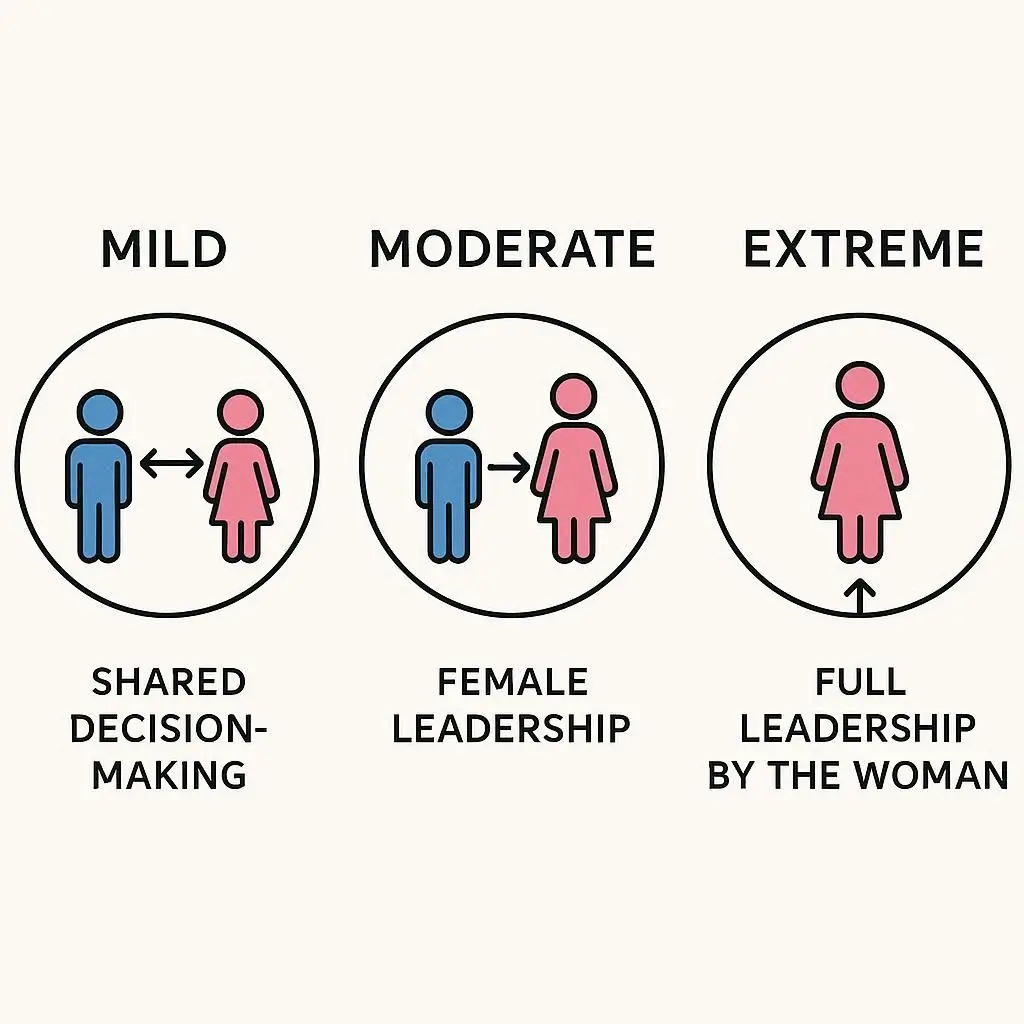
Not all female led relationships look the same. Some couples prefer light guidance, while others embrace full role reversal in relationships. These variations are often described in three main types: mild, moderate, and extreme. Each type creates its own relationship dynamics, power balance, and sense of fulfillment.
Mildly Female-Led Relationships
In a mildly female-led partnership, the woman guides decisions but doesn’t dominate every aspect. For example, she may take the lead in money management in relationships, while the man manages certain household responsibilities. The supportive role of the male partner allows space for equality in relationships, even with the woman in the leadership role.
This kind of woman-led relationship often feels natural to modern couples. It works well for partners who want to challenge traditional relationship roles without adopting a full female-dominant relationship. Many couples describe this as simply shifting gender stereotypes and finding better balance in daily life.
Moderately Female-Led Relationships
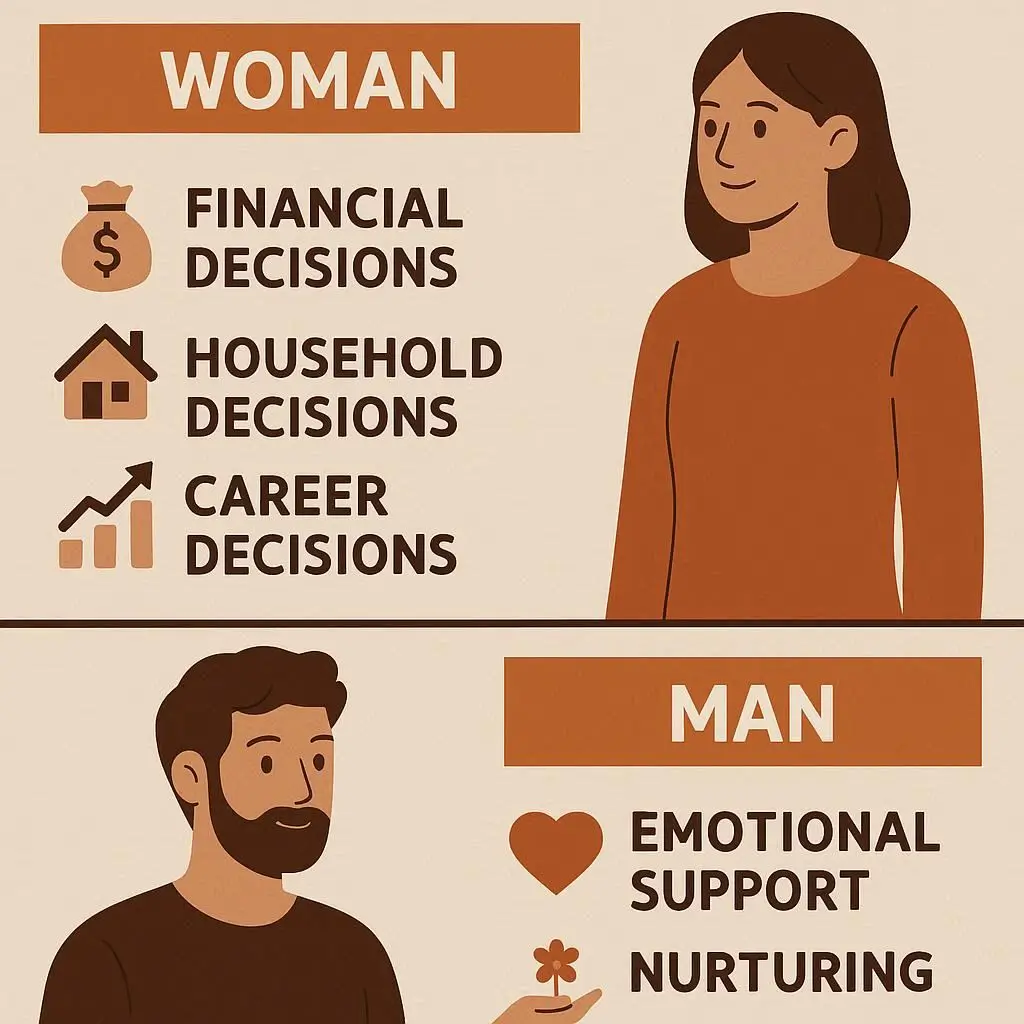
Moderate FLRs give the woman a stronger leadership role in relationships. She may handle financial decision-making, career decisions in relationships, and key guidance in relationships. The man takes on a more submissive role, focusing on emotional support, intimacy in FLRs, and helping maintain respect and balance in the home.
This arrangement can bring a sense of relationship empowerment for both partners. The woman feels supported in her leadership role, while the man enjoys the stability of a nurturing partner role. Couples exploring FLRs at this level often find that strong communication in relationships keeps the dynamic healthy and fulfilling.
Moderately female-led marriages or partnerships may also explore intimacy and control in private. For some, this includes power exchange relationships or consensual BDSM. For others, it simply means a dominant woman in bedroom dynamics, always based on trust and consent.
Extremely Female-Led Relationships
In an extremely female-led marriage or partnership, the woman holds the dominant role in nearly every area of life. She makes decisions about finances, household responsibilities, lifestyle choices, and even sexual dynamics. The man accepts a fully submissive role, often embracing gender role reversal as a lifestyle choice.
This type of FLR represents the strongest form of female leadership in relationships. Some couples view it as an alternative lifestyle choice that offers deep relationship fulfillment. Others see it as a way to create clear relationship roles without conflict.
Extreme FLRs rely heavily on trust, guidance in relationships, and consistent communication. When those elements are present, couples often describe a sense of empowerment in relationships that feels liberating and stable at the same time.
Benefits of Female Led Relationships
A female led relationship (FLR) can bring many benefits to couples. By changing traditional relationship roles, it creates new dynamics that often strengthen emotional bonds, improve communication in relationships, and provide practical advantages. Both partners can feel more fulfilled when leadership and supportive roles are clearly defined.
Emotional Benefits
One of the strongest benefits of a woman-led relationship is emotional support. In these partnerships, the male partner often takes on a nurturing partner role, which helps the woman lead while maintaining a strong connection. This setup encourages trust and consent, allowing both partners to express feelings freely. Couples often report increased intimacy in FLRs, deeper understanding, and a sense of relationship empowerment.
Female leadership in relationships also reduces misunderstandings. When roles are clear, arguments over decision-making in relationships are less frequent. Men and women in control relationships often feel more satisfied because responsibilities are shared based on strength and preference rather than tradition.
Practical Benefits
FLRs offer practical advantages as well. Many women in these relationships handle financial decision-making, career decisions in relationships, and household responsibilities. This can lead to better money management in relationships and a balanced division of labor.
For couples exploring FLRs, role reversal in relationships allows the man to focus on supportive tasks, while the woman manages larger goals. Modern couples often find this approach makes daily life smoother. It can also reduce stress related to traditional gender roles and outdated expectations.
Practical benefits can extend to sexual dynamics too. Some couples explore power exchange relationships or consensual BDSM, creating sexual empowerment while respecting boundaries. Others focus on leadership in relationships and decision-making that doesn’t involve intimacy but strengthens partnership efficiency.
Relationship Stability
Perhaps one of the most overlooked advantages is relationship stability. A female-dominant relationship can provide clear structure and clarity in relationship roles. When communication in relationships is strong, the power dynamics in relationships are balanced, reducing conflicts.
Couples who embrace female leadership in relationships often report higher relationship fulfillment. The male partner’s supportive role allows the woman to take charge, but both feel respected and valued. Non-traditional relationships like FLRs can be surprisingly resilient because both partners actively work to maintain respect and balance.
Whether it’s emotional support, practical benefits, or long-term stability, FLRs show that alternative relationship choices can strengthen bonds. Gender role reversal and relationship empowerment don’t weaken love—they can make it stronger.
Challenges in Female Led Relationships
While female led relationships (FLRs) offer many benefits, they also come with challenges. Changing traditional relationship roles can be difficult. Society often expects men to lead, so couples exploring a female-led partnership may face criticism or misunderstanding. Overcoming these obstacles requires patience, trust, and strong communication in relationships.
Overcoming Stigma and Misunderstandings
One of the biggest challenges for FLRs is societal stigma. People may assume a female-dominant relationship is unusual or that the male partner is weak. This misconception can create pressure for both partners, especially in public or family settings.
Couples navigating women in control relationships often need to educate others about their choices. They might explain that a female-led marriage isn’t about control without consent. Instead, it’s about a balanced relationship power structure, clear relationship roles, and mutual respect. Using personal examples of decision-making in relationships or household responsibilities can help others understand the dynamic.
Another common misunderstanding is about intimacy in FLRs. Some assume that role reversal in relationships always involves sexual dominance. While sexual dynamics or consensual BDSM may be part of some female-led marriages, many FLRs focus on communication, guidance in relationships, and emotional support.
Balancing Power and Respect
A second challenge in female-led partnerships is balancing power and respect. Even when the woman is the dominant partner, both sides must feel valued. Without balance, a relationship can feel unfair or tense.
Successful FLRs emphasize trust and consent. The male partner’s supportive role doesn’t mean he lacks importance. Emotional support, nurturing partner behavior, and participation in financial decision-making all create relationship empowerment.
Couples exploring alternative relationships or role reversal relationships often establish clear boundaries. These help maintain respect while allowing women to lead in important areas. Modern relationship roles can be flexible, but clarity is key. Both partners should communicate openly about expectations, responsibilities, and intimacy.
Balancing leadership and support also improves relationship fulfillment. Men in these relationships often report satisfaction in providing guidance and stability, while women enjoy empowerment in relationships. Together, they navigate changing gender roles and societal expectations, building a strong, healthy bond.
Despite challenges, female-led relationships can thrive when couples prioritize trust, respect, and open communication. Understanding stigma, addressing misunderstandings, and maintaining balance are essential steps toward long-term relationship stability.

Female Led Relationships and Finances
Money plays a big role in every relationship. In female led relationships (FLRs), financial decision-making often shifts toward the woman. This change doesn’t just alter household responsibilities—it can also create stability and empowerment in relationships.
Advantages of Female-Led Financial Decisions
When women take the leadership role in relationships, they often manage money with long-term goals in mind. Many female-led marriages show that women handle budgeting, saving, and career decisions in relationships more carefully. This leads to stronger money management in relationships and less financial stress.
A female-dominant relationship can also bring clarity to household responsibilities. Instead of arguing over bills or purchases, couples establish clear roles. The woman leads with financial guidance, while the man supports through emotional stability and daily contributions. This role reversal in relationships often creates more equality in partnerships because both partners agree on who does what.
Research also suggests that women in control relationships often focus on security and planning. This means investments, retirement savings, and career growth are considered with care. For couples exploring FLRs, these habits can improve relationship fulfillment and provide long-term benefits.
Hiring a Financial Advisor for Female-Led Households
Some couples prefer professional help to make financial decisions easier. In a woman-led relationship, hiring a financial advisor can strengthen confidence in choices. Advisors help with budgeting, planning, and avoiding mistakes that might create stress.
Insights from Financial Professionals
Financial experts often say that female leadership in relationships improves stability. They note that women are usually more detail-oriented when it comes to financial decision-making. Advisors also highlight how female-dominant relationships create accountability. When one partner takes the leadership role, progress is easier to track.
Professionals also point out that modern couples benefit from blending emotional support with smart money choices. By combining the woman’s leadership role with expert advice, households create a strong relationship power balance that prevents conflict.
Tips from Real Individuals
Couples who live in female-led marriages share practical advice as well. Many recommend dividing labor fairly so that financial leadership doesn’t become overwhelming. Some men explain that taking the supportive role in household responsibilities, like managing daily expenses or handling errands, keeps balance in the relationship.
Others stress the importance of communication in relationships. One couple explained that by setting financial boundaries early, they avoided disagreements later. Another shared that focusing on respect and balance turned money discussions into teamwork rather than conflict.
These real-world examples show that empowerment in relationships isn’t just about who earns or spends money. It’s about guidance in relationships, mutual trust, and a shared goal of financial stability.
Roles in Female Led Relationships
In a female led relationship (FLR), understanding each partner’s role is essential. Clear responsibilities help maintain balance, trust, and relationship empowerment. While the woman takes the leadership role in relationships, the man often assumes a supportive role. Together, these roles create harmony in emotional, practical, and even sexual aspects of the partnership.
Responsibilities of the Female Leader
The woman in a female-led partnership usually guides the relationship in major areas. She often takes the leadership role in relationships by making decisions about finances, household responsibilities, and career choices. Women in control relationships may also set boundaries, create a division of labor, and direct day-to-day planning.
In terms of relationship dynamics, she often acts as the dominant partner while maintaining respect and balance. Her responsibilities extend to communication in relationships, guidance in relationships, and nurturing her partner emotionally. Some couples also explore intimacy in FLRs, where the woman may take a dominant role in sexual dynamics, power exchange relationships, or consensual BDSM.
Leadership in relationships isn’t about control without consent. Instead, it’s about creating clarity, providing direction, and fostering equality in partnerships. Female leadership in relationships encourages emotional support, mutual trust, and a sense of fulfillment for both partners.
Responsibilities of the Male Partner
The male partner in a female-led marriage or partnership takes on a supportive role. This doesn’t mean he lacks importance. His contributions include emotional support, helping with household responsibilities, and participating in decision-making when appropriate. Men in these relationships often focus on nurturing the woman’s leadership while maintaining trust and consent.
In some cases, the male partner participates in financial decision-making or career planning but generally follows the woman’s lead. He may also embrace gender role reversal in relationships, taking on a submissive role in intimacy while providing stability in other areas. By doing so, he strengthens relationship power balance and relationship fulfillment.
The male partner’s role requires communication in relationships, respect for the woman’s leadership role, and consistent support. Many men report satisfaction in taking on this supportive position, finding that it strengthens emotional bonds and allows for relationship empowerment.
Together, these roles form a foundation for modern relationship roles. Couples exploring female-dominant relationships often describe a stronger connection, better communication, and more equality in partnerships than in traditional setups.
How to Start a Female-Led Relationship
Starting a female led relationship (FLR) takes thought, trust, and clear communication in relationships. It’s not about suddenly flipping roles or forcing dominance. Instead, it’s about exploring alternative relationships and creating a partnership where the woman leads and the man takes a supportive role. Couples who plan carefully often find greater relationship fulfillment and stronger emotional bonds.
Open Communication
The first step in any woman-led relationship is open communication. Both partners should discuss expectations, desires, and limits before making changes. This includes talking about financial decision-making, household responsibilities, career decisions in relationships, and intimacy in FLRs.
By talking openly, couples can establish a shared understanding of relationship dynamics, power dynamics in relationships, and relationship roles. Communication also helps prevent misunderstandings about dominant and submissive roles. When both partners express feelings honestly, trust and consent become the foundation of the partnership.
Setting Boundaries and Agreements
Next, set clear boundaries and agreements. A female-dominant relationship works best when both partners know what to expect. Boundaries may include who makes which decisions, how household responsibilities are divided, and how sexual dynamics are approached.
Couples exploring FLRs or role reversal relationships often find that writing down agreements helps maintain respect and balance. For example, one partner might handle certain tasks while the other leads on major choices. This creates clarity and reduces conflict, ensuring equality in partnerships and relationship empowerment.
Building Mutual Respect
Mutual respect is key to successful female-led marriages. Leadership in relationships should never come at the expense of the man’s dignity or sense of purpose. A supportive partner role is valuable and necessary for balance in modern relationship roles.
Respect and balance in female-led partnerships encourage relationship fulfillment, emotional support, and trust. Men over 50 dating or couples exploring FLRs for the first time often report that when respect is prioritized, the relationship becomes stronger and more satisfying. Leadership roles in relationships, combined with guidance in relationships, help couples navigate challenges while keeping intimacy and control positive and consensual.
Starting a female-led relationship requires patience, communication, and commitment. By focusing on trust, clear boundaries, and mutual respect, couples can enjoy the benefits of alternative lifestyle choices while maintaining a healthy, fulfilling partnership.
Female Led Relationship Stories and Experiences
Every female led relationship (FLR) is unique. Some couples adopt mild role reversals, while others fully embrace women in control relationships. Real experiences show how communication in relationships, trust and consent, and relationship empowerment shape modern couples’ lives. Stories from couples exploring FLRs highlight both challenges and the rewards of female leadership in relationships.
Real-Life Examples
Many couples describe their journey into a female-led partnership as life-changing. For example, one couple shifted financial decision-making and household responsibilities to the woman, allowing the man to focus on emotional support and nurturing roles. They reported reduced conflict over money management in relationships and clearer relationship roles.
Another couple experimented with role reversal in relationships in intimate settings. The woman became the dominant partner in the bedroom, which enhanced intimacy in FLRs and led to greater sexual empowerment. Both partners emphasized that consent and communication were essential for success.
Some men over 50 dating younger women also find fulfillment in female-led marriages. They report satisfaction in supportive roles, enjoying a balance where the woman leads career decisions and financial planning, while they contribute through guidance in relationships and household responsibilities.
Lessons Learned
Stories from couples reveal important lessons. First, communication in relationships is critical. Discussing expectations openly prevents misunderstandings and builds trust. Second, setting clear boundaries helps maintain respect and balance. Even in extreme female-led marriages, couples who establish agreements feel more secure and empowered.
Third, relationship fulfillment comes from understanding the value of each role. A supportive partner role is just as important as leadership in relationships. Emotional support, nurturing, and active participation in decision-making create equality in partnerships.
Finally, couples note that exploring alternative relationships requires patience and flexibility. Gender role reversal isn’t about replacing one form of dominance with another; it’s about creating a partnership that works for both people. Many report that female leadership in relationships strengthens bonds, enhances intimacy, and fosters empowerment in relationships.
Overall, real-life experiences show that female-led partnerships, when built on trust, respect, and clear communication, can be deeply fulfilling. They challenge traditional relationship roles and offer modern couples a way to explore equality, power dynamics in relationships, and emotional support in a meaningful, balanced way.
FAQs
What is a female-led relationship?
A female led relationship is where the woman takes the leadership role in relationships and the man takes a supportive role, creating trust, balance, and empowerment.
What are the four levels of a female-led relationship?
Female led relationships have four levels: mild, moderate, strong, and extreme, showing different degrees of female leadership and male supportive roles in the relationship.
What is the intimacy of a female led relationship?
Intimacy in female led relationships involves emotional closeness, sexual empowerment, and consensual dominance, strengthening trust, communication, and connection between partners in the relationship.
What is FLR in lifestyle?
FLR in lifestyle means making female leadership in relationships a long-term choice, affecting finances, household responsibilities, intimacy, and modern relationship roles consistently.
What is ggg dating?
GGG dating is being good, giving, and game in intimacy, often applied in female led relationships to support sexual empowerment and consensual power exchange.
What is enm dating?
ENM dating, or ethical non-monogamy, is openly exploring other relationships with honesty and consent, sometimes practiced in female led relationships to maintain trust and balance.
Conclusion
Female led relationships are changing how modern couples connect. They focus on trust, respect, and clear communication in relationships. The woman leads, and the man takes a supportive role, creating balance and emotional support. Couples in FLRs often manage finances, household responsibilities, and career decisions together, improving relationship fulfillment.
These relationships also allow partners to challenge traditional gender roles and enjoy relationship empowerment. Intimacy in FLRs can strengthen bonds while maintaining consent and respect. Whether mild or extreme, female-led partnerships provide equality in partnerships, guidance in relationships, and stronger emotional support. By embracing these principles, couples can create nurturing partnerships, improve power dynamics in relationships, and achieve long-term stability and happiness together.