

Relationships rise and fall on how couples talk to each other. When healthy communication breaks down, small issues can turn into lasting damage. Dr. John Gottman, founder of the Gottman Institute, described four destructive patterns that often predict divorce. These patterns are known as the 4 horsemen of relationships. They include criticism, contempt, defensiveness, and stonewalling. Each one chips away at trust, intimacy, and connection. Over time, they can create emotional withdrawal, toxic relationship behaviors, and unhealthy conflict styles.
The good news is that couples can change these patterns. With couples therapy, marriage therapy, or even online couples therapy, partners learn new skills to rebuild closeness. Using “I” statements, practicing empathy in communication, and applying conflict resolution strategies make a difference. By learning antidotes, couples replace negative communication patterns with healthier habits that improve understanding, respect, and long-term satisfaction.
What Are the 4 Horsemen of Relationships?
Short intro to Dr. John Gottman’s research
Dr. John Gottman is one of the most respected names in relationship science. His work at the Gottman Institute has helped millions of couples understand what makes love last. After studying thousands of marriages in his Love Lab, Gottman found patterns in the way couples fight. Some disagreements were normal and even healthy. Others, however, turned toxic and signaled deeper issues. He named the four most damaging behaviors the “Four Horsemen of the Apocalypse.” These included criticism, contempt, defensiveness, and stonewalling.
What made his research stand out was accuracy. Gottman could predict divorce with over 90% accuracy by identifying these behaviors. That’s why couples therapy programs, marriage therapy sessions, and even online couples therapy services often focus on these toxic communication patterns. They’re not just everyday fights. They are negative conflict patterns that destroy trust and connection if left unchecked. Understanding these unhealthy communication habits is the first step toward change.
Why they’re called “horsemen”
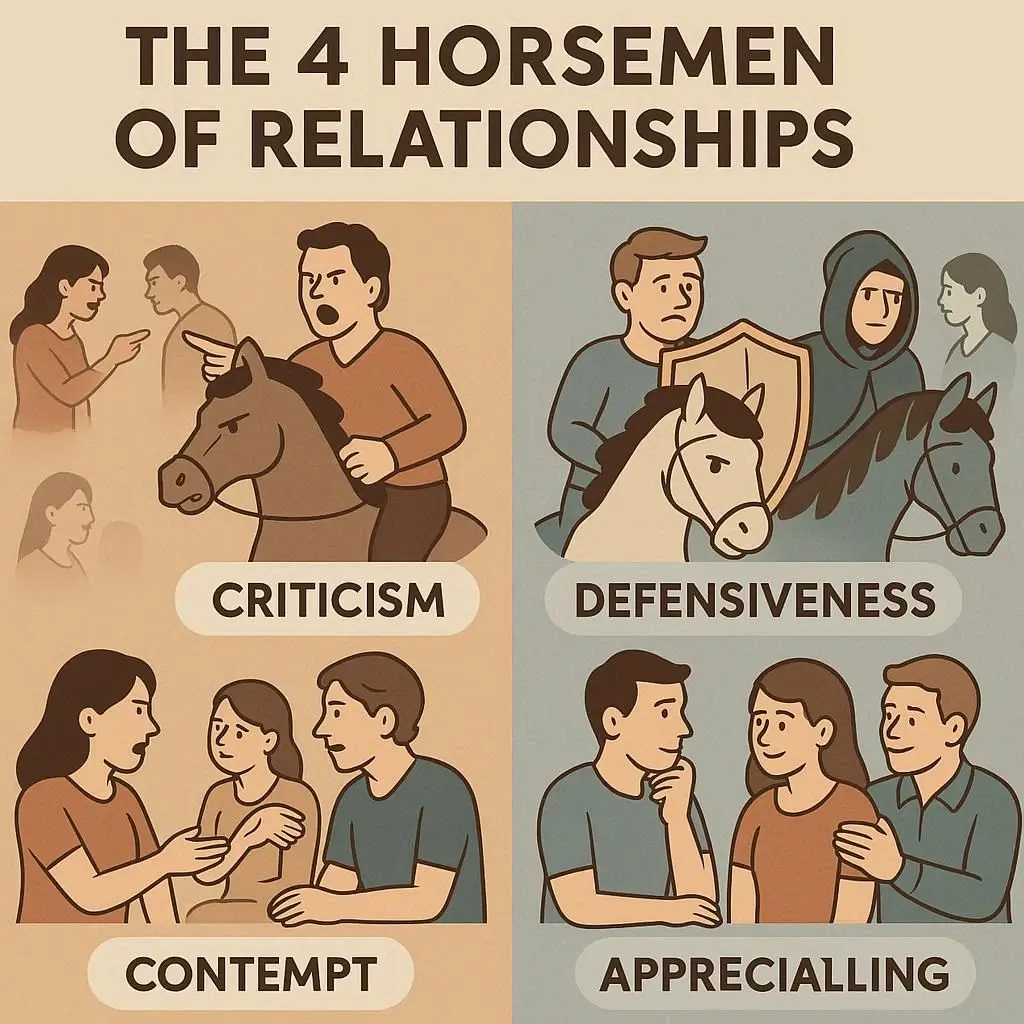
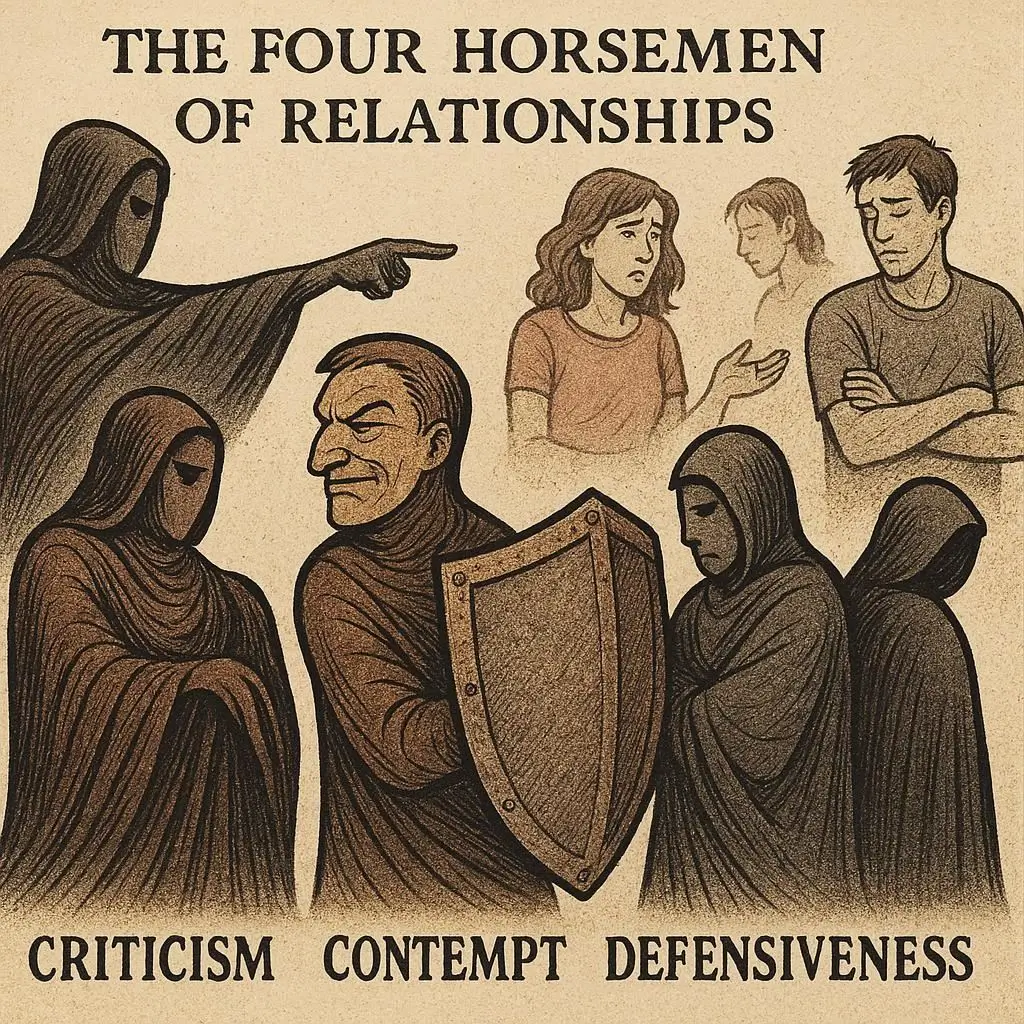
The term “horsemen” comes from the biblical Four Horsemen of the Apocalypse. Just as the horsemen in the story brought destruction, Gottman used the metaphor to explain how these behaviors destroy relationships. Criticism in relationships often feels like constant blame. Contempt is full of sarcasm, eye-rolling, and disrespect. Defensiveness makes couples avoid responsibility. Stonewalling looks like the silent treatment in marriage or emotional withdrawal during conflict.
When these behaviors appear often, they don’t just hurt feelings. They create communication breakdown in couples. That’s why experts at places like Williamsburg Therapy Group call them toxic relationship behaviors. They become destructive relationship habits that repeat themselves until couples feel stuck. These unhealthy conflict styles may start small but eventually become predictors of divorce in relationships. Once you see them clearly, it’s easier to stop stonewalling, overcome contempt, and replace criticism with gentle startup communication.
How they predict relationship breakdown
The 4 horsemen of relationships don’t show up out of nowhere. They usually grow during years of poor conflict resolution. For example, instead of using “I” statements, partners point fingers and criticize. Instead of showing appreciation and gratitude in relationships, they lean into contempt. When defensiveness takes over, active listening skills vanish. And when one partner feels emotionally overwhelmed, stonewalling replaces intimacy.
Over time, these negative communication patterns build a wall between partners. Gottman found that couples stuck in these destructive cycles had higher chances of separation. These four horsemen communication styles are reliable divorce predictors because they block repair. Without empathy in communication, couples can’t manage emotional overwhelm or rebuild trust and connection. That’s why Gottman method couples therapy focuses on antidotes like self-soothing techniques, conflict resolution strategies, and communication exercises for couples.
Learning how to avoid the 4 horsemen of relationships isn’t about perfection. It’s about building healthy relationship habits and strengthening relational satisfaction. With practice, couples can turn unhealthy communication habits into supportive relationships that last.
The Four Horsemen Explained
When Dr. John Gottman from the Gottman Institute described the 4 horsemen of relationships, he gave couples a way to understand why some marriages collapse. These four destructive patterns—criticism, contempt, defensiveness, and stonewalling—are more than bad habits. They’re communication styles that slowly chip away at trust, intimacy, and respect.
Understanding them is the first step toward change. By seeing how they show up in daily life, couples can recognize unhealthy communication habits early. Once identified, they can replace them with healthier ways of connecting. Each of the horsemen has its own signs, examples, and long-term effects. Let’s look at them one by one.
Criticism
Criticism in relationships often shows up as an attack on someone’s character, not their behavior. Instead of saying, “I wish you’d help with the dishes,” a partner might say, “You never help around here. You’re so lazy.” This shift from describing an action to labeling a person is what makes criticism so harmful.
In everyday life, criticism can creep into small moments. A husband may complain, “You’re always on your phone,” or a wife might say, “You never listen to me.” The phrases may sound simple, but they create a defensive wall. The partner on the receiving end feels judged rather than heard.
Over time, constant criticism damages connection. Instead of solving issues, couples find themselves stuck in blame cycles. It creates resentment, a negative conflict pattern, and eventually a breakdown in communication. That’s why relationship counseling often focuses on replacing criticism with a gentle startup communication style, such as using “I” statements. Saying “I feel lonely when we don’t talk at dinner” is far healthier than “You never talk to me.”
Criticism may seem small, but it lays the foundation for the more toxic horsemen that follow.
Contempt
Among the four horsemen communication styles, contempt in relationships is the most dangerous. Gottman calls it the single biggest predictor of divorce. Unlike criticism, contempt goes further by expressing superiority. It doesn’t just blame—it mocks, belittles, and shows disrespect.
Signs of contempt in speech include sarcasm, hostile humor, name-calling, or eye-rolling. For example, a partner might sneer, “Wow, great job forgetting the groceries again. You’re so reliable.” The words drip with disrespect. In nonverbal behavior, contempt often looks like dismissive sighs, mocking facial expressions, or exaggerated gestures meant to humiliate.
What makes contempt different from criticism is the intent. Criticism attacks actions, while contempt attacks self-worth. It conveys that one partner sees themselves as better or smarter. Over time, this shreds intimacy in marriage and destroys respect in the relationship.
The long-term effects are severe. Couples experiencing contempt often face a complete communication breakdown, emotional withdrawal, and a sharp drop in relational satisfaction. In couples therapy or marriage therapy, therapists encourage empathy, appreciation, and gratitude to counteract contempt. Simple habits like expressing daily thanks can rebuild respect and connection. Without these antidotes, contempt often leads to separation.
Defensiveness
Defensiveness in relationships is another common horseman. It usually comes as a response to criticism or contempt. Instead of listening to their partner’s concern, a defensive person shifts blame, makes excuses, or counters with their own complaint.
For example, if one partner says, “You forgot to pay the bill again,” a defensive response might be, “Well, you never reminded me!” Or if someone complains, “You’re always late,” the reply may be, “I wouldn’t be late if you were ready on time.” These replies protect the self but shut down problem-solving.
The reason people get defensive is simple: no one likes feeling attacked. It’s a natural reaction to guard self-esteem. But in relationships, defensiveness adds fuel to the fire. Instead of calming conflict, it escalates tension and prevents resolution.
In real life, defensiveness makes partners feel unheard and dismissed. Over time, it leads to negative communication patterns and unhealthy conflict styles. Relationship counseling often teaches antidotes such as active listening skills and empathy in communication. When a partner takes responsibility—even for part of the problem—it lowers tension and opens the door to solutions.
Defensiveness may feel like self-protection, but it builds a wall between couples instead of a bridge.
Stonewalling
The fourth horseman, stonewalling in relationships, happens when one partner shuts down completely. It’s often described as the “silent treatment in marriage.” Instead of arguing back, the partner withdraws emotionally, avoids eye contact, and refuses to engage.
Stonewalling often appears when conflicts get too heated. A husband may sit in silence during a fight, staring at the floor. A wife may walk out of the room without a word. On the surface, it may look like calm. In reality, it signals emotional overwhelm. The partner shuts down not to solve the problem, but to escape it.
This behavior creates distance. Emotional withdrawal makes the other partner feel abandoned, invisible, or unworthy. Over time, stonewalling damages trust and makes reconciliation harder. It becomes a destructive relationship habit that fuels disconnection.
Managing emotional overwhelm is the key antidote. Therapists recommend self-soothing techniques, like taking a short break, deep breathing, or scheduling a calm discussion later. In Gottman Method couples therapy, couples learn to notice early signs of overwhelm and pause before shutting down. That way, conversations can resume in a healthier space.
Stonewalling may seem like a way to avoid fights, but it quietly erodes intimacy and security in the long run.
Antidotes to the 4 Horsemen
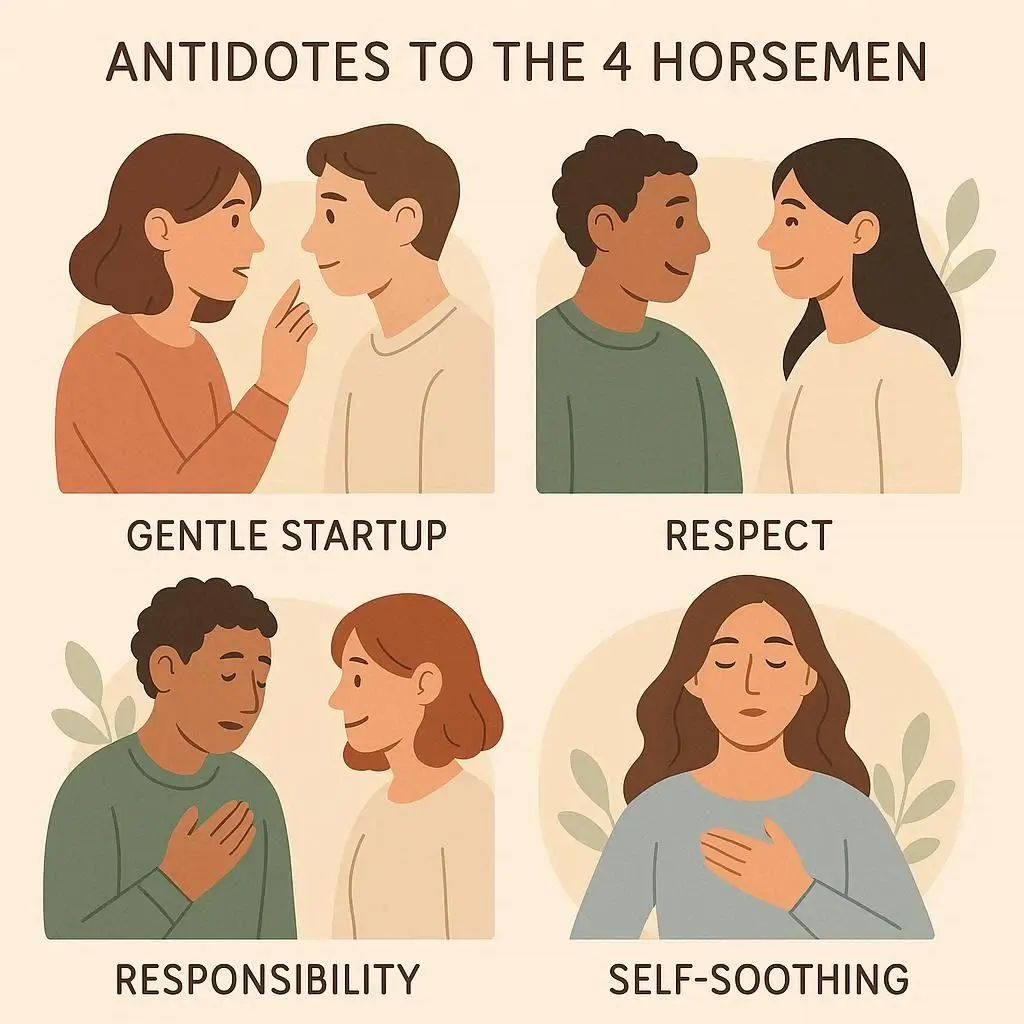
Knowing about the 4 horsemen of relationships isn’t enough. The real work begins when couples learn how to replace these destructive habits with healthier ones. Dr. John Gottman and the Gottman Institute emphasize that every horseman has an antidote. These antidotes don’t just fix problems. They help couples strengthen connection, build trust, and create supportive relationships. By practicing them daily, partners can transform negative communication patterns into positive ones that keep relationships strong.
Replacing Criticism with Gentle Startups
Criticism in relationships often begins small. A partner might say, “You never help with chores,” instead of focusing on a specific behavior. Over time, those harsh words pile up and create distance. The antidote is to replace criticism with gentle startup communication.
A gentle startup focuses on feelings and needs instead of blame. Instead of saying, “You’re so lazy,” a healthier approach is, “I feel stressed when the house is messy. Can we clean together?” This style uses “I” statements and expresses emotions without attacking character.
Couples therapy often highlights the power of tone. Starting conversations softly reduces defensiveness and keeps both partners engaged. According to relationship counseling experts, gentle startups lower emotional intensity and make solutions easier to find.
Think of it like opening a door instead of slamming it shut. When you start gently, your partner feels invited to connect rather than pushed away. Over time, this approach prevents criticism from becoming a toxic pattern.
Building Respect to Counter Contempt
Contempt in relationships is the strongest predictor of divorce. It shows up through sarcasm, insults, and hostile humor. Because it attacks self-worth, the antidote must rebuild respect and appreciation.
One powerful solution is cultivating daily habits of gratitude. When couples make a point of saying thank you, acknowledging small efforts, and expressing admiration, they slowly undo the damage of contempt. For example, saying, “I really appreciate how you made dinner tonight” replaces sarcasm with warmth.
Therapists at places like Williamsburg Therapy Group often recommend keeping an appreciation journal. Writing down three things you value about your partner each day shifts focus from flaws to strengths. Over time, these practices restore intimacy in marriage and rebuild trust.
Another antidote is empathy in communication. When partners genuinely try to understand each other’s struggles, contempt has less room to grow. Respect becomes the foundation, and conflict resolution strategies become easier to apply.
Replacing contempt with appreciation may seem simple, but it changes the entire emotional climate of a relationship.
Taking Responsibility Instead of Defensiveness
Defensiveness in relationships shuts down dialogue and escalates fights. The antidote isn’t easy, but it’s powerful: take responsibility, even if only for part of the issue.
Imagine one partner says, “You forgot to pay the bill.” A defensive reply might be, “Well, you never reminded me.” Instead, the healthier response is, “You’re right, I missed it. I’ll set a reminder so it doesn’t happen again.” This shift shows accountability.
Taking responsibility doesn’t mean accepting all the blame. It means owning your part and showing willingness to work together. Couples who practice this find conflicts resolve faster. It also reduces toxic relationship behaviors and prevents small issues from turning into bigger fights.
In online couples therapy and marriage therapy, therapists teach active listening skills alongside responsibility-taking. When partners listen with openness and admit mistakes, they build trust and create supportive relationships.
By choosing responsibility over defensiveness, couples move from blame to problem-solving. That change makes a lasting difference.
Self-Soothing to Stop Stonewalling
Stonewalling in relationships often happens when one partner feels overwhelmed. Instead of engaging, they shut down. The antidote is self-soothing techniques that calm emotions and reopen communication.
When someone feels the urge to withdraw, taking a short break can help. Stepping away for 20 minutes to breathe, take a walk, or practice mindfulness lowers stress levels. The key is to return to the conversation later, when both partners are calmer.
In the Gottman Method couples therapy, self-soothing is taught as a skill. It helps prevent the cycle of emotional withdrawal and silent treatment in marriage. Simple practices like slow breathing, journaling, or listening to calming music create space for clearer communication.
Couples can also set agreements: if one partner needs a break, they let the other know and promise to revisit the issue. This prevents feelings of abandonment and keeps respect intact.
Stopping stonewalling with self-soothing not only prevents communication breakdown in couples but also builds resilience. Instead of shutting doors, it opens pathways to intimacy and problem-solving.
How to Recognize the 4 Horsemen in Your Own Relationship
Recognizing the 4 horsemen of relationships in your own life is not always easy. Many couples fall into these patterns without realizing it. These habits can start small, but over time they grow and create distance. The good news is that by learning what to watch for, you can notice warning signs early. Awareness is the first step toward change.
Self-assessment checklist
Here are some simple questions to ask yourself:
- Do I often point out my partner’s flaws instead of expressing how I feel?
- Do I use sarcasm, mocking, or eye-rolling when upset?
- Do I tend to defend myself instead of listening to my partner’s side?
- Do I shut down or stay silent during conflict to avoid the fight?
If you answered “yes” to more than one of these, it may be a sign that the horsemen are present in your relationship.
Red flags to watch for
Criticism often shows up as “you always” or “you never” statements. These words blame the other person and ignore the bigger picture. Contempt is more dangerous and usually comes out through name-calling, mocking, or disrespectful body language. Defensiveness may sound like constant excuses or turning the blame back on your partner. Stonewalling is silent withdrawal, where one partner shuts down instead of talking. Each of these signs weakens trust and makes problems harder to solve.
How couples can spot patterns early
Couples can prevent damage by paying attention to how they argue. Occasional conflict is normal, but repeating the same harmful behaviors is a red flag. If small disagreements always turn into attacks or silence, that’s a warning sign. Try to notice what happens in the middle of a fight. Do you criticize instead of expressing your needs? Do you roll your eyes or laugh at your partner’s feelings? Do you walk away without explanation? These patterns can become habits if they are not addressed.
By slowing down and reflecting after disagreements, couples can recognize these behaviors sooner. Talking about them openly, without blame, also helps. It is not about pointing fingers but about noticing together what hurts the relationship. Couples who can spot the horsemen early are more likely to make positive changes before lasting damage is done.
Practical Ways to Deal With the 4 Horsemen
Knowing about the 4 horsemen of relationships is not enough. The real challenge is learning how to handle them in daily life. Every couple argues, but the way you communicate during conflict makes the difference. By practicing healthy habits, you can replace harmful patterns with ones that build trust and connection.
Communication Exercises for Couples
Strong communication is the best defense against the horsemen. One exercise is the “gentle startup.” Instead of starting with blame, share your feelings with “I” statements. For example, say “I feel worried when we don’t talk” instead of “You never listen.” This small shift reduces tension.
Another exercise is active listening. One partner talks for a few minutes while the other listens without interrupting. Afterward, the listener repeats what they heard to confirm understanding. This builds empathy and prevents miscommunication.
Couples can also practice daily check-ins. Spend ten minutes each evening sharing highs and lows of the day. These moments build connection outside of conflict and create a safe space for sharing.
When to Seek Couples Therapy
Sometimes, exercises at home are not enough. If criticism, contempt, defensiveness, or stonewalling have become constant, therapy may help. A trained counselor can guide couples through healthier communication patterns. Therapy is not a sign of failure. It is a way to get tools and support when the horsemen feel overwhelming.
Couples may benefit from therapy if arguments always escalate, if silence lasts for days, or if trust has been badly damaged. A therapist can also help couples recognize patterns they cannot see on their own. Many couples report that even a few sessions improve their ability to listen and respond without attack.
Words of Wisdom from Experts
Relationship experts like Dr. John Gottman remind us that conflict itself is not the problem. The way couples handle conflict is what matters. Experts say kindness, respect, and responsibility are the strongest antidotes to the horsemen. When couples practice empathy and accountability, they create a foundation that can withstand disagreements.
One powerful piece of advice is to remember you are on the same team. The goal is not to win an argument but to solve the issue together. Experts also suggest that repair attempts, like humor or an apology, can stop a fight from spiraling. Even small efforts show care and help rebuild connection.
Practical steps, open communication, and timely support can make all the difference. Couples who address the horsemen early and consistently are more likely to build a long-lasting, healthy relationship.

FAQs About the 4 Horsemen of Relationships
What are the 4 horsemen in a relationship?
The 4 horsemen of relationships are criticism, contempt, defensiveness, and stonewalling. These negative communication habits often lead to serious problems between couples if left unchecked.
What are the 4 predictors of divorce?
According to John Gottman, the 4 horsemen of relationships are strong predictors of divorce. When couples rely on these patterns, trust and intimacy quickly break down.
What are the four behaviors that cause 90% of all divorces?
The four behaviors include criticism, contempt, defensiveness, and stonewalling. These 4 horsemen of relationships create toxic cycles that damage love and prevent healthy communication over time.
What are the 4 horsemen of death in a relationship?
The 4 horsemen of relationships are often called the death signs of love. They represent destructive patterns that slowly break down connection, respect, and closeness.
What are the signs of stonewalling?
Signs of stonewalling include silence, emotional withdrawal, and shutting down. It is one of the 4 horsemen of relationships and often creates distance and frustration.
What do the 4 Horsemen represent?
The 4 horsemen of relationships represent destructive communication styles that predict separation. They show how repeated negative behaviors can weaken intimacy, respect, and long-term emotional safety.
Conclusion
The 4 horsemen of relationships show how small habits can grow into big problems. Criticism, contempt, defensiveness, and stonewalling slowly weaken love and trust. When couples fall into these patterns, the connection often suffers. The good news is change is possible.
Healthy communication, empathy, and active listening can repair damaged bonds. Couples therapy, self-awareness, and practical strategies help replace toxic cycles with supportive ones. When partners commit to growth, they build stronger respect and intimacy. By recognizing these signs early, couples can protect their bond and create lasting happiness together.