
Anxious Attachment Style: Signs, Causes & How to Heal
If you find yourself constantly wondering whether your partner truly loves you, replaying conversations for hidden meanings, or feeling a wave of panic when a text goes unanswered, you may be living with an anxious attachment style. This deeply ingrained pattern of relating to others affects millions of people — and it quietly shapes every romantic relationship, friendship, and emotional bond in your life. The good news? Understanding your anxious attachment style is the first and most powerful step toward healing it.
In this guide, we will walk you through what attachment theory says about the anxious pattern, the telltale signs you carry it, where it comes from, and — most importantly — how you can move toward something healthier. Whether you are newly discovering attachment theory or you have been working on yourself for years, there is something here for you.
What Is Attachment Theory? A Quick Foundation
Before diving into the anxious pattern, it helps to understand the framework it sits within. Attachment theory was originally developed by British psychiatrist John Bowlby in the 1950s and later expanded by psychologist Mary Ainsworth through her landmark Strange Situation studies. The core idea is straightforward: the emotional bonds we form with our earliest caregivers — usually parents — create internal blueprints for how we expect relationships to work throughout life.
Ainsworth identified three primary attachment styles in children, later expanded to four in adults:
- Secure attachment — comfort with intimacy, independence, and emotional regulation
- Anxious (preoccupied) attachment — hypervigilance to relationship threats, craving reassurance
- Avoidant (dismissive) attachment — discomfort with closeness, emotional self-sufficiency as a shield
- Disorganized (fearful-avoidant) attachment — a mixed pattern often linked to trauma
Each of these styles reflects a learned strategy for getting needs met. The anxious preoccupied attachment pattern, in particular, develops when a child learns that love is unreliable — sometimes present, sometimes absent — and that the only way to secure it is through constant vigilance and emotional escalation.
Signs of an Anxious Attachment Style
The anxious attachment style shows up in recognizable patterns. While no two people experience it identically, most people with this pattern will relate to the majority of the signs below.
Emotional and Cognitive Signs
- Fear of abandonment — a deep, persistent dread that people you love will leave, even when there is no evidence they will
- Constant need for reassurance — asking your partner “Are we okay?” or “Do you still love me?” even after receiving a positive answer
- Overthinking and rumination — replaying conversations, analyzing tone of voice, and searching for signs of disapproval
- Emotional sensitivity — interpreting neutral events (a short reply, a cancelled plan) as rejection
- Low self-worth in relationships — a nagging sense that you are “too much” or not good enough to be truly loved
Behavioral Signs
- Protest behaviors — becoming clingy, picking arguments, or withdrawing as a test to see if your partner will chase you
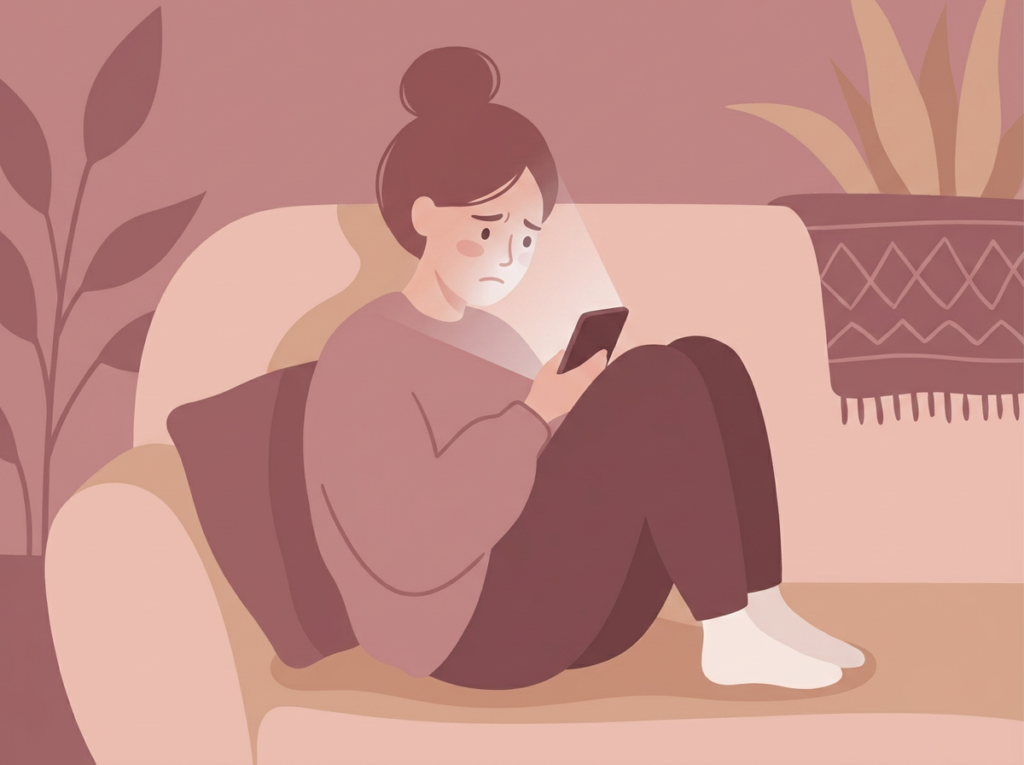
- Phone monitoring — checking whether your partner has read your messages and obsessing over response times
- Preoccupation with the relationship — spending disproportionate mental energy on the relationship even during work, social events, or other activities
- Difficulty with space — feeling threatened or rejected when a partner wants alone time or values independence
- People-pleasing — suppressing your own needs to keep the peace and avoid the risk of conflict
Signs in Conflict
- Escalating emotionally during disagreements
- Finding it very hard to calm down after an argument
- Interpreting your partner’s need to step away as contempt or abandonment
- Bringing up past grievances because every new conflict feels like confirmation of a deeper fear
“Anxiously attached individuals are not overly emotional because they are weak or dramatic. They are responding to a nervous system wired to treat relationship uncertainty as a survival threat.”
What Causes Anxious Attachment Style?
The roots of the anxious attachment style almost always trace back to early childhood experiences. Understanding these origins is not about blaming your parents — it is about gaining clarity on why your nervous system learned the strategies it learned.
Inconsistent Caregiving
The most common origin story involves a caregiver who was sometimes warm and responsive and sometimes emotionally unavailable — perhaps due to their own depression, stress, addiction, or personal history. When a child cannot predict whether comfort will be available, they learn to amplify their distress signals to increase the chances of getting a response. This hyperactivation of the attachment system becomes the default setting in adult relationships.
Emotional Unavailability
Even without dramatic neglect or trauma, emotional unavailability in a parent can lay the groundwork for anxious attachment. A parent who was physically present but emotionally distant — preoccupied, critical, or dismissive of feelings — teaches a child that emotional connection is scarce and must be fought for.
Loss, Illness, or Instability
Significant disruptions in early life — a parent’s illness, a divorce, frequent moves, or the loss of a caregiver — can activate attachment anxiety even in children who had secure beginnings. The child learns that people and stability cannot be counted on.
Cultural and Social Factors
Anxious attachment is not purely the product of individual family dynamics. Cultural messages about love, gender roles, and emotional expression also play a role. Environments that romanticize jealousy and possessiveness as signs of love, or that shame emotional needs, can reinforce anxious patterns.
Past Relationship Experiences
While childhood is the original blueprint, relationship experiences in adulthood can deepen or trigger anxious patterns. Being cheated on, experiencing a sudden breakup, or spending years in a relationship with an emotionally unavailable partner can solidify anxious tendencies even in people who started out more securely attached.
The Anxious-Avoidant Relationship Dynamic
If you have an anxious attachment style, there is a good chance you have found yourself repeatedly drawn to partners who seem emotionally unavailable or reluctant to fully commit. This is the notorious anxious-avoidant relationship dynamic — one of the most painful and most common patterns in modern dating.
Here is why it happens: the avoidant partner’s emotional distance triggers the anxiously attached person’s deepest fear (abandonment), which then activates protest behaviors (clinginess, emotional demands, arguments). Those protest behaviors, in turn, confirm the avoidant partner’s belief that intimacy is suffocating, causing them to pull further away. The more the avoidant withdraws, the more the anxious person pursues. The more the anxious person pursues, the more the avoidant withdraws.
This cycle can feel like passion — the push-pull creates intense highs and devastating lows that the nervous system can mistake for chemistry. But left unaddressed, it is exhausting for both partners and rarely resolves without conscious effort on both sides.
Understanding this dynamic is not about labeling your partner as bad or broken. Both patterns are learned survival strategies. Real change becomes possible when both people are willing to examine their own contribution to the cycle. For more on this, see our guide on the anxious-avoidant relationship trap.
Anxious Attachment Style and Relationship Anxiety
It is important to distinguish between relationship anxiety as a general experience and the anxious attachment style as a structural pattern. Most people feel nervous at the start of a new relationship, worry during conflict, or feel insecure after a difficult conversation. That is normal.
The anxious preoccupied attachment pattern is different in both intensity and persistence. It is not triggered only by genuine red flags — it is triggered by ordinary events like a partner being quieter than usual, needing a day alone, or taking longer to reply to a message. The anxiety feels disproportionate to the actual situation because it is drawing on old emotional material, not just the present moment.
This pattern also feeds directly into the nervous system. Research published in the journal Attachment & Human Development shows that people with anxious attachment have a more reactive stress response in relationship contexts — higher cortisol, faster heart rate, and slower recovery after perceived threats. This is not a character flaw; it is physiology shaped by experience.
How Anxious Attachment Affects Your Relationships
The anxious attachment style does not just affect how you feel — it directly shapes the quality and longevity of your relationships. Here is what the research and clinical experience consistently show:
Lower Relationship Satisfaction
Anxiously attached individuals tend to report lower relationship satisfaction on average, even in objectively healthy relationships. The internal narrative of “this won’t last” or “I don’t deserve this” filters out positive evidence and amplifies perceived threats.
Higher Conflict Frequency
Because protest behaviors can include picking arguments or manufacturing drama to test a partner’s loyalty, anxiously attached individuals often find themselves in more frequent conflicts — not because the relationship is worse, but because the attachment system is generating false alarms.
Partner Burnout
Even the most patient, caring partner can struggle under the weight of constant reassurance-seeking. Over time, this can erode the connection it was intended to preserve.
Self-Abandonment
Perhaps the most painful long-term consequence of anxious attachment is the degree to which people lose themselves in relationships — prioritizing a partner’s needs, suppressing their own voice, and making decisions based on fear of losing the relationship rather than their own authentic values.
How to Heal Anxious Attachment Style
Healing the anxious attachment style is one of the most meaningful and rewarding journeys you can undertake. It does not happen overnight, and it is rarely linear — but it is absolutely possible. The research on attachment and adult relationships consistently shows that attachment patterns are not fixed; they can shift toward security through intentional effort, corrective experiences, and support.
1. Build Self-Awareness About Your Triggers
The first step is learning to recognize when your attachment system is activated. Start keeping a simple journal. When you feel anxious in your relationship, ask: What exactly triggered this? Is there genuine evidence for what I fear, or am I responding to a familiar feeling? Over time, you will begin to distinguish between intuition (signal) and attachment anxiety (noise).
2. Work With a Therapist — Especially One Trained in Attachment
Individual therapy, particularly approaches like Emotionally Focused Therapy (EFT), Internal Family Systems (IFS), or attachment-informed psychodynamic therapy, can be transformative. A skilled therapist helps you access and process the early experiences that shaped your attachment pattern, not just manage the symptoms. If cost is a barrier, attachment-focused self-help resources and workbooks can offer a meaningful complement.
3. Practice Self-Soothing Before Reaching for Reassurance
One of the most practical skills for anxiously attached individuals is developing the capacity to self-soothe. Before you send a text asking “Are we okay?”, try these steps: take five slow, deep breaths; name the emotion you are feeling (anxiety, fear, sadness); remind yourself of evidence that the relationship is stable; and ask whether you genuinely need reassurance right now or whether you can sit with the discomfort for 20 minutes and see if it passes.
This is not about suppressing your needs. It is about building the internal resources to regulate before acting from fear.
4. Challenge Your Core Beliefs About Lovability
Most anxious attachment patterns rest on a foundational belief: I am too much. I am not enough. People will eventually leave me. These beliefs were formed in a context where they made sense — but they are not facts about you. Cognitive techniques such as those used in CBT can help you examine the evidence for and against these beliefs and gradually replace them with more accurate, compassionate alternatives.
5. Communicate Your Needs Clearly — Without Protest Behaviors
Healthy communication is both a skill and a practice. Rather than expressing your needs through behaviors designed to provoke a reaction (going silent, picking a fight, manufacturing jealousy), practice stating your needs directly: “I’ve been feeling disconnected lately and I’d really value some quality time together this weekend.” This takes vulnerability — and it is far more likely to get you what you actually need.
6. Seek Out and Invest in Secure Relationships
One of the most powerful healers of anxious attachment is the experience of a genuinely secure relationship — with a partner, a friend, a therapist, or a community. Secure people do not respond to your anxiety with more distance or escalation; they offer consistent warmth that gradually teaches your nervous system that connection does not have to be fought for. Over time, these “earned security” experiences can genuinely shift your attachment orientation.
7. Develop a Strong Sense of Self Outside the Relationship
Anxious attachment is often accompanied by an over-reliance on the relationship as the primary source of self-worth and identity. Building a life that includes meaningful friendships, personal goals, creative pursuits, and solo enjoyment reduces the intensity of the attachment dynamic and gives you an inner foundation that does not depend on any one person’s approval.
Moving Toward Secure Attachment
The goal of healing your anxious attachment style is not to become emotionally detached or stop caring deeply about your relationships. The goal is secure attachment — the capacity to love fully and openly without the constant background hum of fear that the love will be taken away.
Securely attached people are not immune to jealousy, conflict, or heartbreak. But they have a stable internal base that allows them to navigate relationship challenges without catastrophizing, to express needs without shame, and to give their partner space without interpreting it as abandonment.
Research by Dr. Phillip Shaver and colleagues shows that somewhere between 40–50% of adults have earned or developed security — meaning they started with an insecure attachment style and moved toward security through conscious effort and positive relationship experiences. That number is worth sitting with. Security is not just something you are born into. It is something you can build.
Frequently Asked Questions About Anxious Attachment Style
Can you have an anxious attachment style and not realize it?
Absolutely. Many people with anxious attachment have normalized their patterns to the point where they feel like personality traits rather than learned responses. If you regularly feel consumed by relationship worry, find yourself needing far more reassurance than your partner provides, or have a pattern of intense, volatile relationships followed by breakups, it is worth exploring whether anxious attachment is part of the picture.
Is anxious attachment style the same as being “needy”?
The label “needy” is both inaccurate and unkind. Anxious attachment is not about having too many needs — everyone has emotional needs in relationships. It is about the specific strategies a person uses to get those needs met, which were shaped by early experiences of inconsistent caregiving. Calling it “neediness” pathologizes a normal human response to an environment where needs were not reliably met. Calling it “anxious attachment” opens the door to understanding and change.
Can anxious attachment be healed without therapy?
Yes, meaningful progress is possible without formal therapy. Self-directed approaches like attachment-focused books and workbooks, mindfulness practices, journaling, and intentionally building secure relationships can all shift the pattern over time. That said, therapy — particularly approaches designed to work with the emotional roots of attachment patterns — tends to accelerate and deepen the healing process significantly. If you have access to it, it is worth investing in.
Will a relationship with an avoidant partner always fail if I have anxious attachment?
Not necessarily, but the anxious-avoidant dynamic requires conscious, sustained effort from both partners to move toward security. If both people are willing to examine their own patterns, communicate honestly, and seek support (individually or as a couple), genuine change is possible. Many couples have moved from an anxious-avoidant dynamic to a secure one. However, if only one partner is willing to do the work, or if the avoidant partner’s withdrawal is extreme, the prognosis is more guarded.
How long does it take to heal anxious attachment?
There is no single timeline. For some people, significant shifts occur within months of committed therapy and self-work. For others, the process unfolds over years. What seems consistent in the research and in clinical experience is that the quality of the healing work matters more than the speed. Deep, lasting change in attachment patterns typically involves processing early emotional experiences, not just learning new behaviors — and that kind of work takes the time it takes. Progress is real even when it does not feel dramatic.
Conclusion: You Deserve a Love That Feels Safe
Living with an anxious attachment style can be exhausting. The constant monitoring, the fear of abandonment, the hypervigilance to every shift in a partner’s mood — it takes enormous energy, and it often leaves you feeling like something is fundamentally wrong with you. There is not. You developed a strategy for surviving a relational environment where connection felt uncertain, and that strategy served a purpose once. It has just outlived its usefulness.
The work of healing is not about becoming someone who cares less. It is about building an inner foundation secure enough that you can love deeply without the constant fear that everything is about to collapse. It is about learning that your needs are legitimate, your voice matters, and the right relationship will not require you to perform or shrink to earn your place in it.
That kind of love is possible. And you deserve it.
Ready to go deeper? Explore our full library of relationship psychology resources, or start with our articles on building secure attachment and recovering from emotional unavailability. Your next chapter starts here.
Sources: Psychology Today — Attachment | Verywell Mind — Anxious-Avoidant Relationships | American Psychological Association — Attachment