

A client relationship partner (CRP) is a professional responsible for managing and growing long-term client connections. They act as the main point of contact between the client and the company, ensuring needs are understood and goals are met. Their role combines relationship management, business strategy, and client advocacy.
In today’s competitive world, clients expect more than just good products or services. They want trust, personal attention, and consistent value. A client relationship partner helps companies meet these expectations by strengthening loyalty, improving retention, and driving steady growth. This makes the role essential for building a sustainable and competitive business.

The Strategic Importance of Client Relationship Partners
Driving Business Growth Through Client Retention
A client relationship partner plays a vital role in keeping existing clients engaged and satisfied. Retaining clients is often more cost-effective than acquiring new ones, and loyal clients generate steady revenue. By ensuring long-term satisfaction and trust, CRPs directly contribute to sustainable business growth.
Building Competitive Advantage
Strong client relationships give a company a clear edge over competitors. A client relationship partner builds this advantage by offering personalized support, anticipating client needs, and delivering value beyond the transaction. This creates stronger loyalty and makes it harder for competitors to replace the trusted relationship.
Roles and Responsibilities of a Client Relationship Partner
Core Duties in Client Management
A client relationship partner is responsible for building trust, managing expectations, and maintaining long-term partnerships. They act as the main point of contact, ensuring smooth communication between the client and the company. Their core duties include understanding client needs, resolving concerns quickly, and creating opportunities for continued collaboration.
Contribution to Business Strategy
Beyond managing relationships, a client relationship partner also supports the company’s long-term goals. By gathering client feedback, identifying market trends, and suggesting improvements, they help shape business strategies. This ensures the company remains client-focused, competitive, and adaptable to changing business needs.
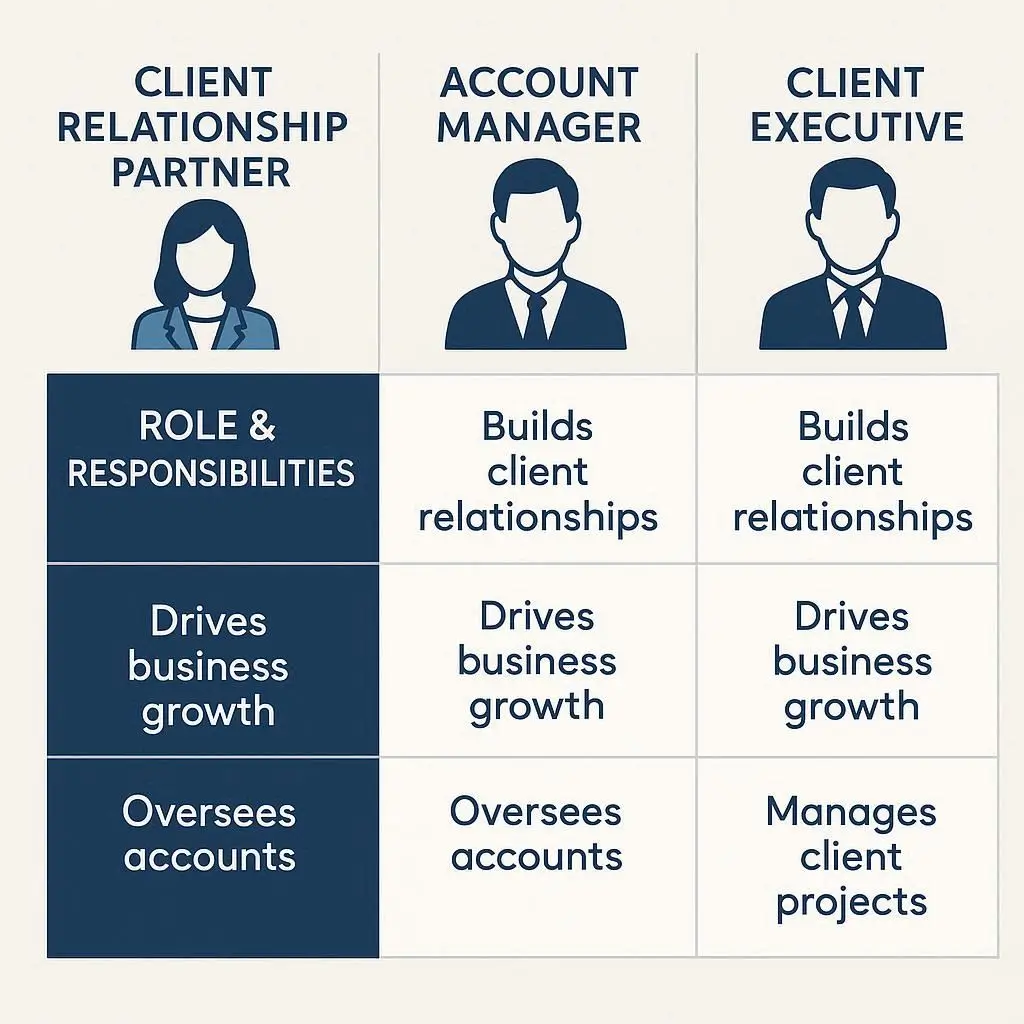
Client Relationship Partner vs. Client Manager vs. Account Executive
Understanding the Client Relationship Partner
A client relationship partner focuses on long-term strategy and trust-building. They ensure the client’s overall experience is positive while aligning relationships with the company’s vision. Their role is more about retention, loyalty, and growth rather than short-term transactions.
Role of a Client Manager
A client manager handles day-to-day operations and project coordination. They monitor deliverables, keep communication flowing, and solve immediate issues. Their job is tactical, ensuring the client receives what was promised on time.
Duties of an Account Executive
An account executive usually works on sales and new client acquisition. They introduce services, close deals, and bring new clients to the company. Their focus is on growth through new business rather than managing existing partnerships.
Key Differences Explained
While an account executive wins new clients and a client manager oversees daily tasks, the client relationship partner takes a higher-level role. They act as a bridge between clients and the business strategy, ensuring long-term satisfaction and retention.
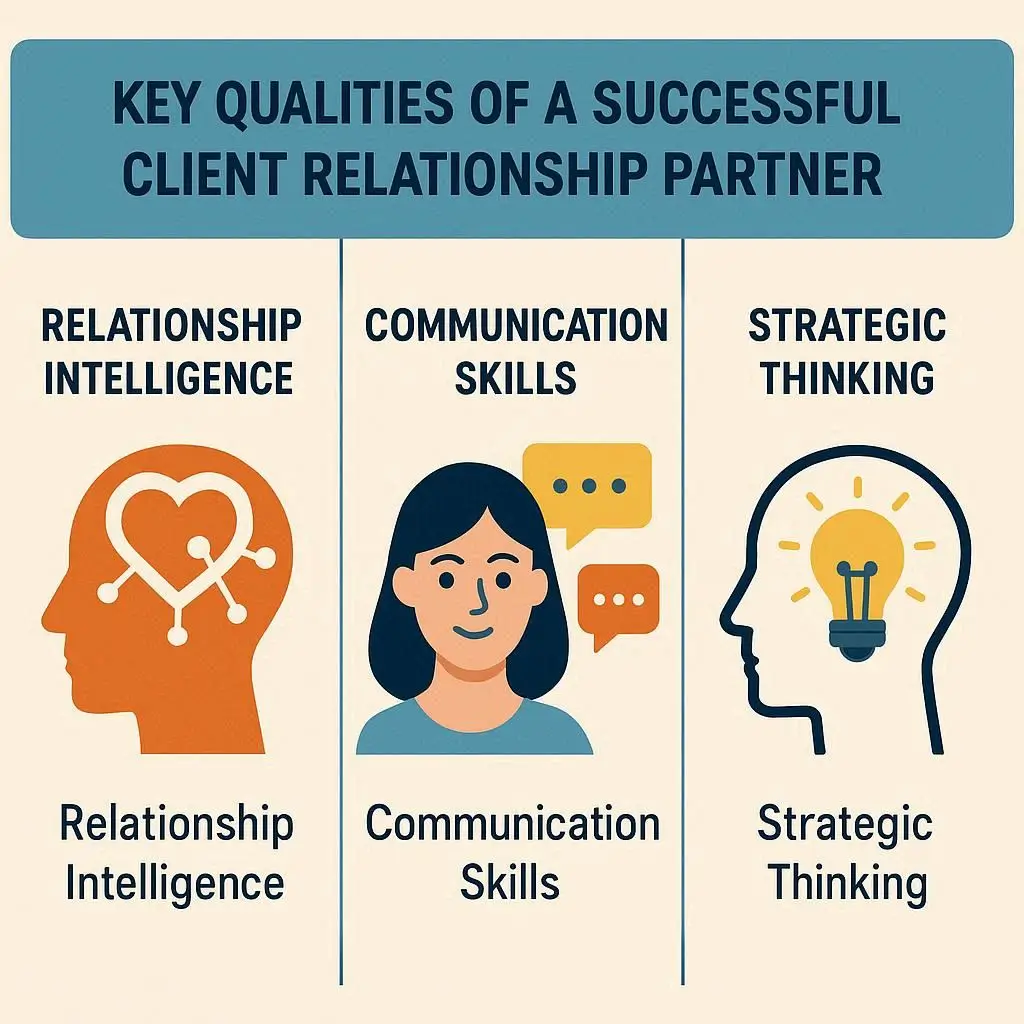
Key Qualities of a Successful Client Relationship Partner
Technical Expertise and Business Acumen
A successful client relationship partner needs strong industry knowledge and business insight. This helps them understand client needs, anticipate challenges, and align solutions with long-term goals.
Relationship Intelligence
Beyond technical skills, they must build trust and rapport. Relationship intelligence ensures they can navigate complex personalities, manage expectations, and strengthen bonds over time.
Strategic Thinking and Problem-Solving
Great client relationship partners look beyond immediate issues. They analyze trends, identify opportunities, and solve problems with a focus on future growth.
Communication Excellence
Clear, persuasive, and empathetic communication is essential. Whether presenting strategies or addressing concerns, effective communication strengthens client confidence and loyalty.

How to Build Strong Client Relationships
Understand Your Client’s Business Deeply
A client relationship partner should study the client’s industry, goals, and challenges. This knowledge builds trust and allows for tailored solutions.
Establish Clear Communication Channels
Open and consistent communication helps avoid misunderstandings. Regular check-ins ensure transparency and strengthen collaboration.
Deliver Consistent Value Beyond Transactions
Clients appreciate more than just services. Offering insights, resources, and guidance shows commitment to long-term partnership.
Practice Proactive Problem Identification
Spotting issues early demonstrates reliability. Addressing challenges before they escalate reinforces confidence in your role.
Personalize the Relationship
Every client is unique. Customizing strategies, remembering preferences, and showing genuine care builds stronger bonds.
Measuring Client Relationship Success
Financial Indicators
Revenue growth, client retention rates, and upsell opportunities reveal the financial value of strong partnerships. These numbers show whether client relationships directly contribute to business performance.
Relationship Health Metrics
Client satisfaction surveys, feedback scores, and engagement levels highlight trust and loyalty. These metrics provide a clear picture of the strength and quality of the relationship beyond financial outcomes.
Common Challenges for Client Relationship Partners
Balancing Multiple Stakeholder Needs
A client relationship partner often deals with decision-makers, managers, and teams with different expectations. Balancing these diverse priorities while keeping the relationship smooth is a constant test.
Maintaining Relevance as Clients Evolve
Markets, industries, and client needs change quickly. A strong CRP must adapt strategies, update knowledge, and ensure they remain valuable to the client over time.
Managing Internal Resources and Delivery
Even the best relationships can break down if service delivery is weak. CRPs must align internal teams, manage resources effectively, and ensure consistent quality for the client.

When to Change Your Client Relationship Partner
Not Going the Extra Mile
If a CRP is only meeting minimum expectations without creating new value, it’s a sign the partnership has plateaued.
Overloaded or Distracted Partner
An overcommitted CRP may struggle to give your business the time and attention it deserves, leading to service gaps.
Client Has Changed or Shifted Focus
As your business evolves, the partner may no longer have the right expertise or alignment to support new goals.
Declining Client Retention Trends
A steady drop in renewals, upsells, or satisfaction scores can point to ineffective relationship management.
Lack of Adaptability to Business Strategy
When a CRP resists change or fails to adjust strategies with your evolving needs, it may be time to seek a better fit.
Technology’s Role in Client Relationship Management
Leveraging CRM Systems
Client Relationship Partners rely on modern CRM platforms to track interactions, maintain records, and identify opportunities for growth.
Data-Driven Insights
Analytics tools help CRPs anticipate client needs, personalize solutions, and improve decision-making with real-time data.
Collaboration and Communication Tools
Video conferencing, project management software, and shared dashboards ensure smoother collaboration between clients and internal teams.
Automation for Efficiency
Automating routine tasks like reporting, scheduling, and follow-ups frees up CRPs to focus on high-value relationship building.
Emerging Technologies
AI-driven assistants, predictive analytics, and machine learning are transforming how CRPs manage client relationships in the future.

Examples of Client Relationship Partner Success in Business
Expanding Long-Term Client Contracts
A skilled Client Relationship Partner can turn a one-year contract into a multi-year partnership by consistently demonstrating value and aligning services with evolving client needs.
Turning At-Risk Clients Into Loyal Advocates
Through proactive communication and problem-solving, CRPs often save accounts that were on the verge of leaving, transforming dissatisfied clients into strong brand supporters.
Driving Cross-Selling and Upselling Opportunities
By deeply understanding client operations, a CRP can introduce complementary solutions that not only boost revenue but also strengthen client trust.
Building Strategic Partnerships Beyond Transactions
Some CRPs elevate relationships from vendor status to trusted advisor, positioning their company as a long-term partner in the client’s growth journey.
How to Become a Client Relationship Partner
Developing Core Skills and Competencies
To step into the role of a Client Relationship Partner, professionals need a mix of relationship-building abilities, business acumen, and strategic thinking. Strong communication and problem-solving skills are critical foundations.
Education, Training, and Career Pathways
Many CRPs begin their journey in account management, sales, or consulting. Over time, they gain industry-specific knowledge and leadership experience that prepares them for more strategic responsibilities.
Certifications and Ongoing Professional Growth
Professional credentials in project management, customer success, or business strategy can strengthen a CRP’s profile. Continuous learning through workshops, mentorship, and executive education ensures long-term career advancement.
Key Takeaways
- A Client Relationship Partner (CRP) plays a vital role in strengthening long-term business relationships and driving sustainable growth.
- The position requires a balance of strategic insight, relationship intelligence, and technical expertise.
- Success as a CRP depends on clear communication, proactive problem-solving, and delivering value beyond transactions.
- Measuring outcomes through financial performance and client relationship health metrics ensures accountability.
- With the right skills, training, and adaptability, professionals can build a rewarding career as a Client Relationship Partner.

FAQs on Client Relationship Partner
What is a Client Relationship Partner?
A Client Relationship Partner is a senior professional responsible for managing and strengthening long-term client relationships. They act as a trusted advisor, ensuring client satisfaction and aligning solutions with business goals.
What is the difference between a client partner and a partner?
A Client Partner focuses on building and managing client relationships, while a Partner often refers to a senior leadership role in a firm with broader responsibilities such as strategy, operations, and ownership.
What are the 5 types of professional client relationships?
The five types include: transactional, consultative, collaborative, trusted advisor, and strategic partnership relationships. Each varies in depth, trust, and long-term focus.
What is another name for a client partner?
Other terms include Relationship Manager, Client Success Partner, or Business Relationship Manager, depending on the organization’s structure.
Is the Client Relationship Partner job secure?
Yes, it is generally secure because businesses increasingly value long-term relationships. However, job security depends on performance, adaptability, and the ability to maintain client trust.
Conclusion
A Client Relationship Partner (CRP) plays a pivotal role in ensuring long-term client trust, satisfaction, and business growth. By acting as a strategic advisor and understanding client needs, they bridge the gap between service delivery and business goals.
In today’s competitive market, companies that invest in strong client partnerships create lasting value and gain a clear edge. A skilled CRP not only drives retention but also shapes opportunities for innovation, making this role essential for modern business success.